- Mon - Sat 10:00 AM - 09:00 PM
- Call Us: +91 9769 289 633
- Chetanw87@Gmail.Com

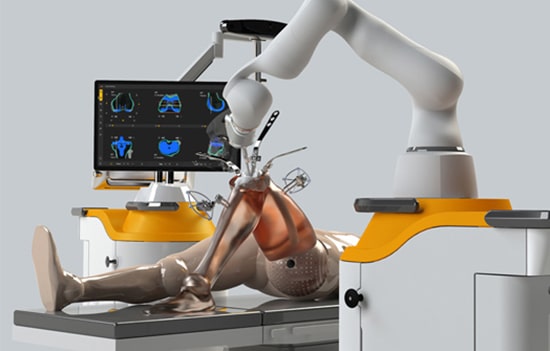
Robotic total knee replacement is a minimally invasive surgical procedure and an alternative to traditional knee replacement surgery that utilizes robotic-arm technology to improve accuracy and precision during a knee replacement.
In general, a robotic total knee replacement procedure is similar to a traditional knee replacement but is performed with the help of a hand-held robotic system. The robotic system does not perform the procedure on its own. The surgery is performed entirely by your surgeon by prompting the robotic hands based on the surgeon’s personalized plan. The robotic surgical system is an additional tool to guide your surgeon to ensure greater accuracy in the placement of knee implants.
Robotic total knee replacement surgery is usually done under general anesthesia with you appropriately placed on the operating table. A 4 to 6 inch incision is made over your knee to expose the knee joint, as opposed to a 10 to 12 inch long incision required for a traditional total knee replacement. Supporting structures of the knee are gently moved out of the way, allowing removal of damaged cartilage and bone tissue from the surfaces of the femur and tibia. Using CT scans, the robotic arm can work from 3D images of the surgical area and perform a range of tasks, such as preparing the bone, introducing the implant, balancing the implant, and checking for the right fit. It utilizes a camera and optical trackers that are secured to the patient's leg to determine the exact position of the knee during surgery. The active robotic sensors map the replacement location and proceed with autonomous resection with the utmost precision. The machine alerts the surgeon to movement and guides them to place the prosthetics at the exact location. The muscles are then approximated, and the incision is closed and covered with a sterile dressing. The robotic system ensures that the surgical plan designed by your surgeon is carried out without any changes and with a high degree of precision.
Robotic total knee replacement is a relatively safe procedure; however, as with any surgery, there are risks and complications that can occur, such as:
Some of the benefits of robotic total knee replacement over traditional knee replacement include:
Best Orthopaedic Surgeon in Thane | Knee Replacement Doctor in Thane | Hip Replacement Surgeon in Thane | Arthroscopic Surgeon in Thane | Spine Specialist in Thane
DR. CHETAN WANKHEDE is Consultant Orthopaedic and Joint Replacement Surgeon in Thane and Mumbai.
Copyright 2022 Dr. Cheatn Wankhede. All Right Reserved.